Paradromics 与 Siemens Healthineers 合作开发脑机接口影像平台
Paradromics and Siemens Healthineers Launch Strategic Initiative to Build Advanced Imaging Foundation for the Future of Brain-Computer Interfaces
Paradromics 与 Siemens Healthineers 宣布合作开发面向植入式脑机接口临床使用的多模态影像平台,覆盖患者候选评估、神经靶点识别、手术规划与术后定位等环节。该平台将整合结构 MRI、功能 MRI、血管成像与 CT,并计划把植入电极记录的直接神经活动与术前影像预测进行比对。合作初期聚焦言语-运动功能,基于 Paradromics 的 Connexus 脑机接口平台。
AUSTIN, Texas--(BUSINESS WIRE)--Oct 19, 2026--
Paradromics Inc., a neurotechnology company developing high-data-rate brain-computer interfaces to restore and enhance human capabilities, today announced a collaboration with Siemens Healthineers to develop an advanced multimodal imaging platform designed to support the growing clinical use of implantable brain-computer interfaces (BCIs).
This press release features multimedia. View the full release here: https://www.businesswire.com/news/home/20261019131262/en/
The collaboration brings together the decades-long expertise of Siemens Healthineers in advanced medical imaging with Paradromics’ clinical and technical expertise in BCIs. The companies will develop an integrated imaging approach spanning the continuum of BCI care, from patient candidacy assessment and neural target identification through surgical planning, intraoperative navigation, post-implant localization, neural validation of functional imaging findings, and outcomes assessment.
The brain is organized into highly specialized but interconnected regions that support functions such as speech, language, movement, vision, hearing and cognition. Because the location and organization of these functional areas can vary from person to person, accurately mapping them before implantation is critical to identifying the best target for each patient.
Brain-computer interfaces are advancing from academic proof-of-concept research toward clinical systems capable of restoring functions such as communication and computer control. As these systems become more sophisticated, accurately identifying the areas of the brain responsible for speech, movement and other functions becomes increasingly important to device performance and patient outcomes.
“Building the best hardware is only part of the story. BCI performance begins before an implant ever reaches the brain,” said Matt Angle, Ph.D., founder and CEO of Paradromics. “The ability to understand each patient’s individual anatomy and functional organization can help us identify the right neural target and place our technology with greater accuracy. Working with Siemens Healthineers will help us streamline this process prior to surgery, so that patients get the best possible outcome.”
Building on standard imaging protocols already used by Paradromics on Siemens Healthineers scanners, the companies intend to develop an optimized end-to-end imaging package encompassing image acquisition, co-registration and processing, surgical-navigation-ready outputs, and increasingly automated analysis. The goal is to create an approach that can ultimately be deployed efficiently across medical centers using Siemens Healthineers imaging systems.
The planned workflow will integrate multiple imaging modalities, including structural MRI, functional MRI, vascular imaging and CT. Together, these technologies can help clinical teams assess brain anatomy, identify functionally relevant regions, plan surgical trajectories, avoid critical vascular structures, and determine the final location of implanted BCI components.
End-to-end imaging workflows will also be developed in cooperation with Paradromics clinical research investigators, including Daniel B. Rubin, MD, PhD, of the Mass General Brigham Neuroscience Institute’s Center for Neurotechnology and Neurorecovery. The participation of leading clinical research centers will help ensure the workflow is informed by real-world BCI research and clinical practice as it is refined for broader adoption.
“At Siemens Healthineers, we are focused on pioneering breakthroughs in healthcare by transforming imaging into increasingly precise, actionable information for clinicians,” said Dr. Donald Hardie, head of Magnetic Resonance at Siemens Healthineers. “Brain-computer interfaces represent an important new frontier for neuroscience. Working with Paradromics gives us the opportunity to explore how advanced multimodal imaging, automation and clinical decision support can help make these procedures more precise, repeatable and ultimately more accessible across leading medical centers.”
A distinctive element of the collaboration will be the ability to compare functional imaging predictions with neural activity recorded directly from implanted Paradromics devices. Intracortical recordings can provide high-resolution information about the activity of individual neurons and their usefulness for decoding intended speech or movement. Comparing those signals with preoperative imaging could help researchers determine how accurately imaging identifies functionally important brain regions and continually refine imaging and targeting methods for future patients.
“Our approach has always been to build the Connexus BCI platform into the existing healthcare ecosystem, working with leaders across the care pathway and using established technologies and clinical workflows wherever they make sense,” said William J. Marks, Jr., MD, MS-HCM, Chief Clinical Officer of Paradromics. “We want to make things easy for hospitals, not require them to buy and train on bespoke capital equipment. Siemens Healthineers is the leader in advanced medical imaging, and most hospitals in the US use their systems. This is an obvious opportunity for collaboration.”
The collaboration is expected to initially focus on speech-motor function, building on Paradromics’ clinical work in communication restoration. The companies envision extending the approach to additional BCI applications, including hand motor control and language restoration following stroke. Imaging and targeting techniques developed for speech, motor and language applications may also have relevance to visual, auditory and cognitive mapping, as well as broader neurosurgical planning.
“There are so many ways to lose your ability to communicate, but with BCI I see that there are just as many different ways to restore it,” said Angle. “Working with Siemens Healthineers can help us better understand each individual brain and place Connexus where it can have the greatest impact, bringing us closer to a future defined by greater independence and possibility.”
About Paradromics
Paradromics builds brain-computer interface (BCI) technologies for seamless human-technology integration, designed to restore and enhance human capabilities. The company’s first-generation device, the Connexus ® BCI, is designed to capture neural activity at the resolution of individual neurons and translate neural intent into speech, computer control, movement, and other essential human functions. Paradromics’ first clinical application focuses on restoring communication for people who have lost the ability to speak due to paralysis and other severe motor impairments. Over time, the platform is designed to support direct AI interaction, advanced prosthetics, sensory feedback, and next-generation treatments for mental health and other neurological conditions. With each new application, Paradromics aims to create a new path to functional recovery and the extension of human agency and intention. For more information, visit www.paradromics.com.
Caution: Connexus® BCI is an investigational device limited by United States law to investigational use. Connexus® and Paradromics™ are trademarks or registered trademarks of Paradromics Inc. All other trademarks are the property of their respective owners.
Dr. Donald Hardie, head of Magnetic Resonance at Siemens Healthineers. Image courtesy: Siemens Healthineers Advanced 3T MRI systems from Siemens Healthineers, such as MAGNETOM Cima.X, have the potential to support the growing clinical use of implantable brain-computer interfaces (BCIs). Image courtesy: Siemens Healthineers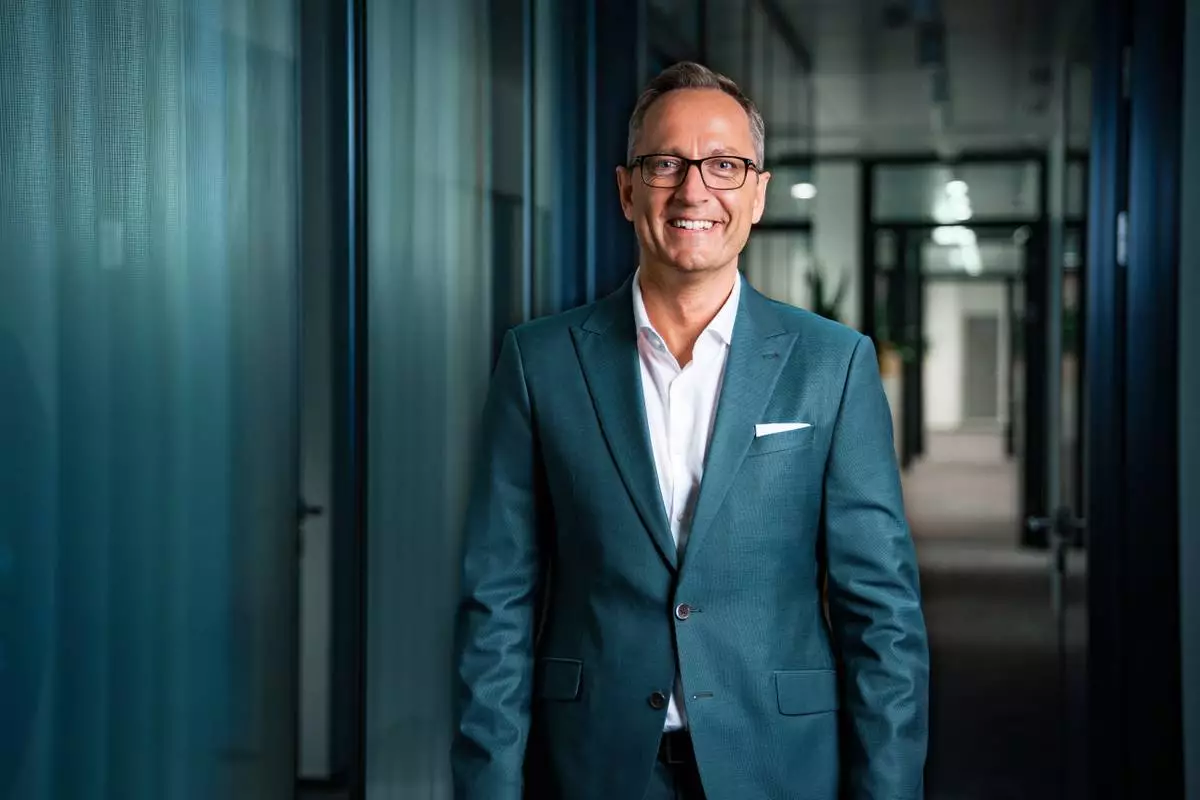

MELBOURNE, Australia (AP) — An Australian federal lawmaker remained in a hospital in a critical but stable condition, Prime Minister Anthony Albanese said Tuesday as he praised a barber who helped restrain the driver accused of deliberately hitting the lawmaker twice.
Helen Haines, a 65-year-old independent politician, was struck by a Toyota Land Cruiser SUV on Monday outside her office in her electorate in the city of Wangaratta in Victoria state. The 43-year-old driver, Brendan Nugent, from nearby Tarrawingee, remained in police custody on Tuesday.
The incident shocked Australians as political violence is rare here and politicians have always been accessible to the public. Most lawmakers are not accompanied by security officers and go about their work and personal lives on their own.
The suspect’s father, Rod Nugent, released a statement Tuesday describing Haines as a “deeply respected, valued and much loved member of our local community.”
“Helen has been our friend for more than 20 years and what happened to her yesterday is devastating and unfathomable,” the father said.
Albanese said he phoned local barber Ricky Jefferies, who had run from his store to help members of the public detain the suspect, to thank him on Tuesday for intervening.
“It’s a reminder that at the worst of times, we see the best of the Australian character,” Albanese said in Melbourne.
Jefferies had earlier told reporters he searched the driver’s pockets and removed a knife. Police confirmed a knife had been found. Jefferies also said he did not consider himself a hero.
“It was crazy," he said. “A lot of people got involved immediately and they didn't even check for danger. They just ran to help.”
Haines’s family released a statement expressing thanks for the “swift assistance of bystanders” as well as health workers and police.
Haines, who was first elected to Parliament in 2019 and had been reelected twice since, was initially taken to a hospital in Wangaratta, a city of 30,000 people. She was airlifted later on Monday to a hospital in the state capital, Melbourne, 236 kilometers (147 miles) away.
The Alfred Hospital didn't respond Tuesday to a request for comment on media reports that Haines had had a leg amputated.
Recent data has shown that threats of political violence have grown in Australia. The head of the Australian Security Intelligence Organisation spy agency, Mike Burgess, on Tuesday reiterated an earlier warning that politically motivated violence was a top security concern, along with espionage and foreign interference.
Police reported in 2025 that threats against parliamentarians had doubled over the past three years. Official data showed more than 1,000 such threats against politicians in the 2025-2026 fiscal year.
Lawmakers from across the political spectrum and Albanese spoke to media outlets Tuesday, urging their colleagues, reporters and the public to turn down the heat in increasingly fractious political debates. Many also said they hoped Australia’s easygoing culture of approachable politicians wouldn’t change.
Haines was not known for polarizing views. The daughter of dairy farmers and mother of three was a nurse, midwife and academic before entering politics, and advocated for rural health matters. She was initially elected in 2019 with a campaign focused on health equity, rural prosperity and climate action.
Albanese said eyewitnesses had reported the suspect passed Haines in his SUV as she stood by the trunk of her parked car. The SUV then turned and came back before the man allegedly drove into the politician, the prime minister said.
Home Affairs Minister Tony Burke told Australian Broadcasting Corp., citing witness accounts, that the driver allegedly reversed and struck Haines a second time, pinning her against her car, after initially hitting her.
One of the bystanders who came to Haines' assistance, Cody Lepoidevin, told reporters he thought he was witnessing a hit-and-run when the SUV backed away after she was first struck.
But instead of fleeing the scene, Lepoidevin said the driver “then reversed and drove back into her.”
Elsewhere in the world, authorities have warned of growing threats to lawmakers. The United States has seen a rise in political violence over the past decade.
That includes the 2022 hammer assault on the husband of then-House Speaker Nancy Pelosi, a Democrat, in California; the 2024 assassination attempt on Donald Trump at a Pennsylvania rally during his presidential campaign as well as another on the president at the White House Correspondents’ Association Dinner in April; and the assassinations in 2025 of a Democratic Minnesota state lawmaker and her husband, and of conservative commentator Charlie Kirk in Utah.
In Britain, killings of politicians have also prompted bolstered security. Labour lawmaker Jo Cox was shot and stabbed in 2016 by a far-right extremist, while Conservative David Amess was stabbed in 2021 by an attacker inspired by the militant Islamic State group.
In July, the former British politician and reality TV contestant Ann Widdecombe was found beaten to death with a hammer at her home. A man has been charged with murder and terrorism-related offenses.
Graham-McLay reported from Wellington, New Zealand.
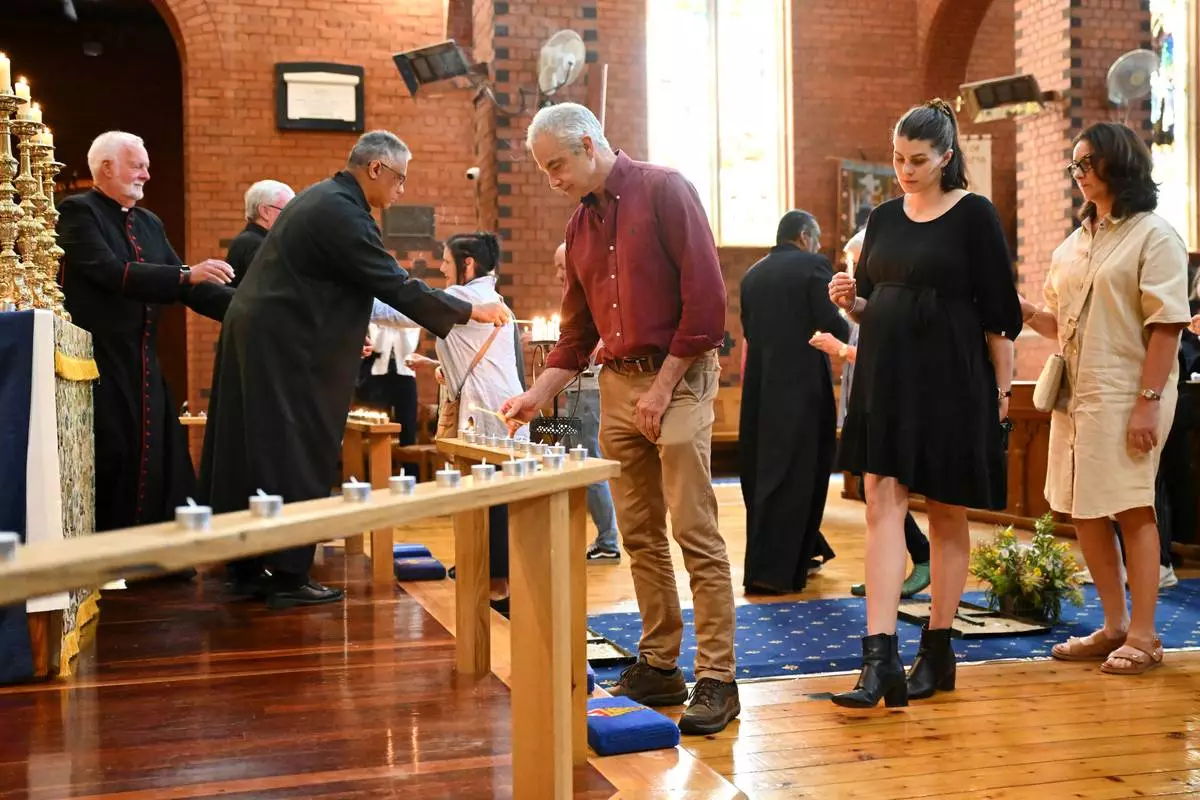
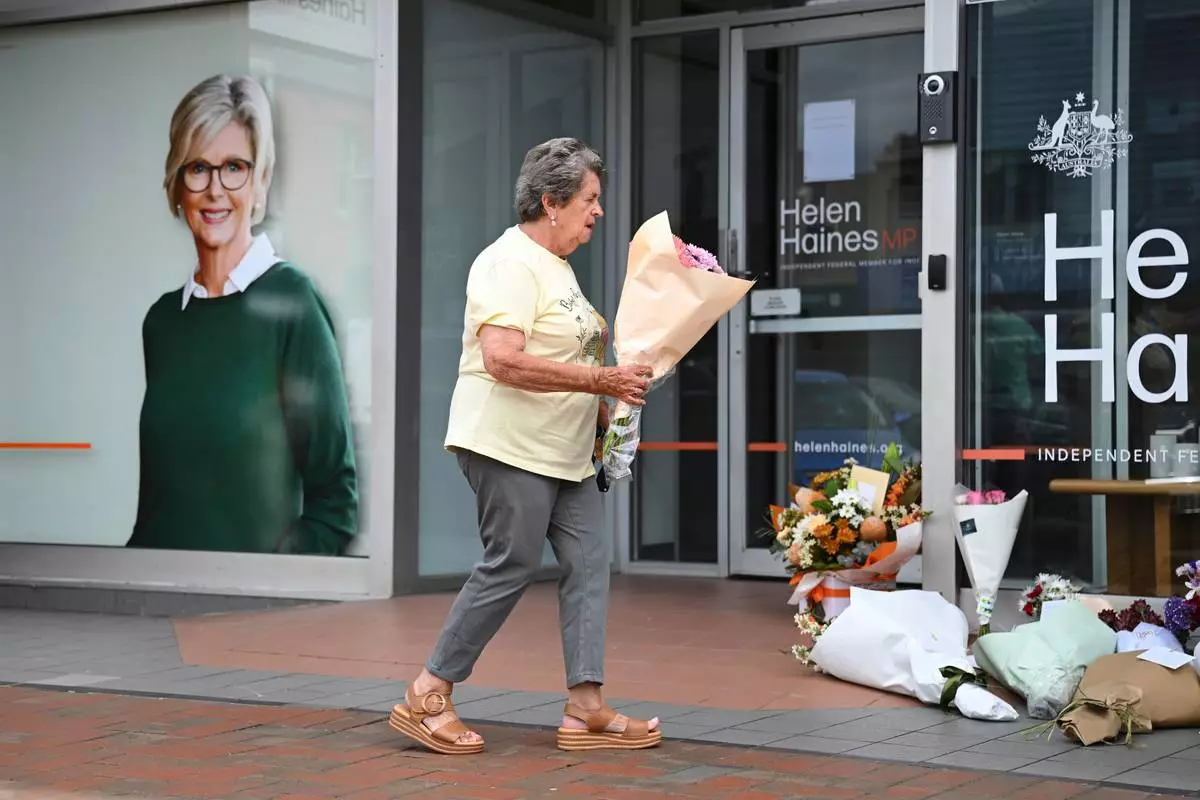
A church sign advertising a vigil for independent member of parliament Helen Haines at the Holy Trinity Anglican Cathedral in Wangaratta, Australia, Tuesday, Oct. 20, 2026. (James Ross/AAP Image via AP) Australian Prime Minister Anthony Albanese, second right, Home Affairs Minister Tony Burke, third left, Victorian Premier Ben Carroll, Chief Commissioner of Victoria Police Mike Bush, left, Australian Federal Police Commissioner Krissy Barrett, obscured, and Victorian Police Minister Paul Edbrooke, right, hold a meeting following the attack on federal independent member of parliament, Helen Haines in Wangaratta, at the Commonwealth Offices in Melbourne, Australia, Tuesday, Oct. 20, 2026. (Con Chronis/AAP Image via AP) Tributes and flowers are placed outside the electoral office for independent member of parliament Helen Haines in Wangaratta, Australia, Tuesday, Oct. 20, 2026. (James Ross/AAPImage via AP) People line up to light a candle during a vigil for independent federal member of parliament, Helen Haines at the Holy Trinity Anglican Cathedral in Wangaratta, Australia, Tuesday, Oct. 20, 2026. (James Ross/AAP Image via AP) A woman delivers flowers at the electoral office of independent member of parliament, Helen Haines, in Wangaratta, Australia, Tuesday, Oct. 20, 2026. (James Ross/AAP Image via AP)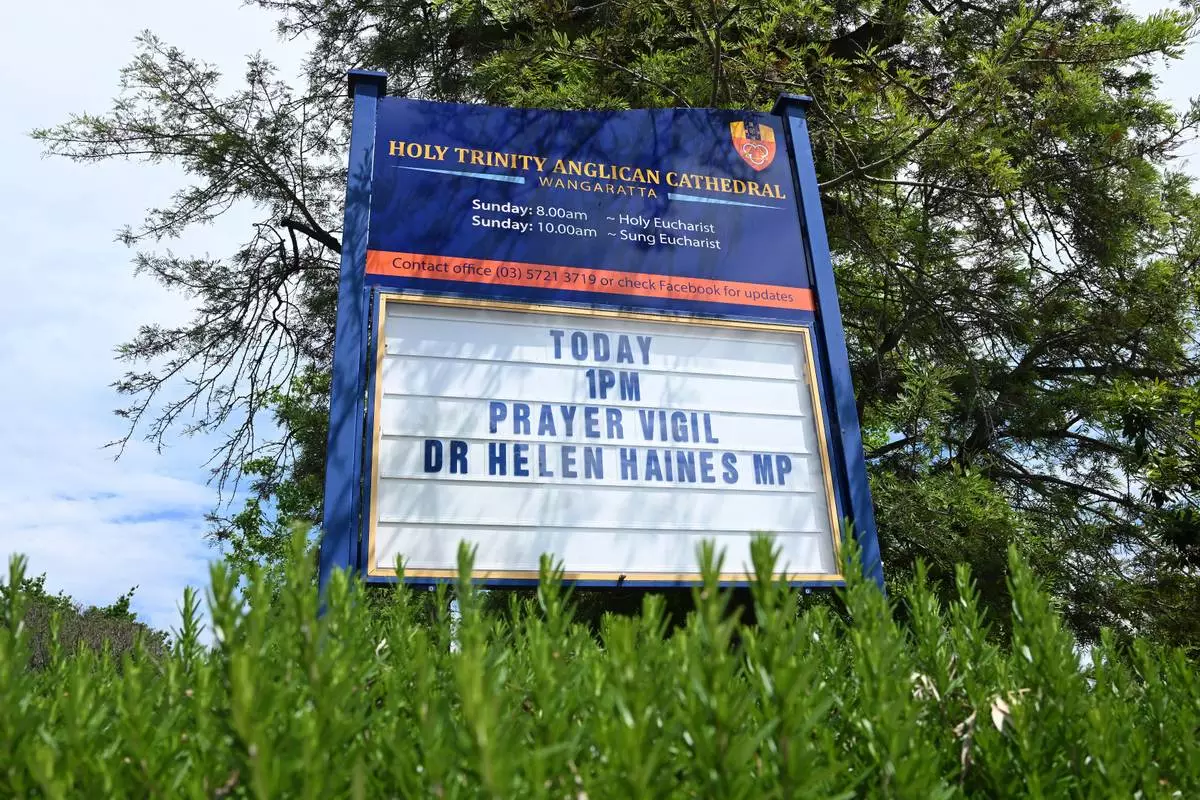


来源:巴士的報 · bastillepost.com